

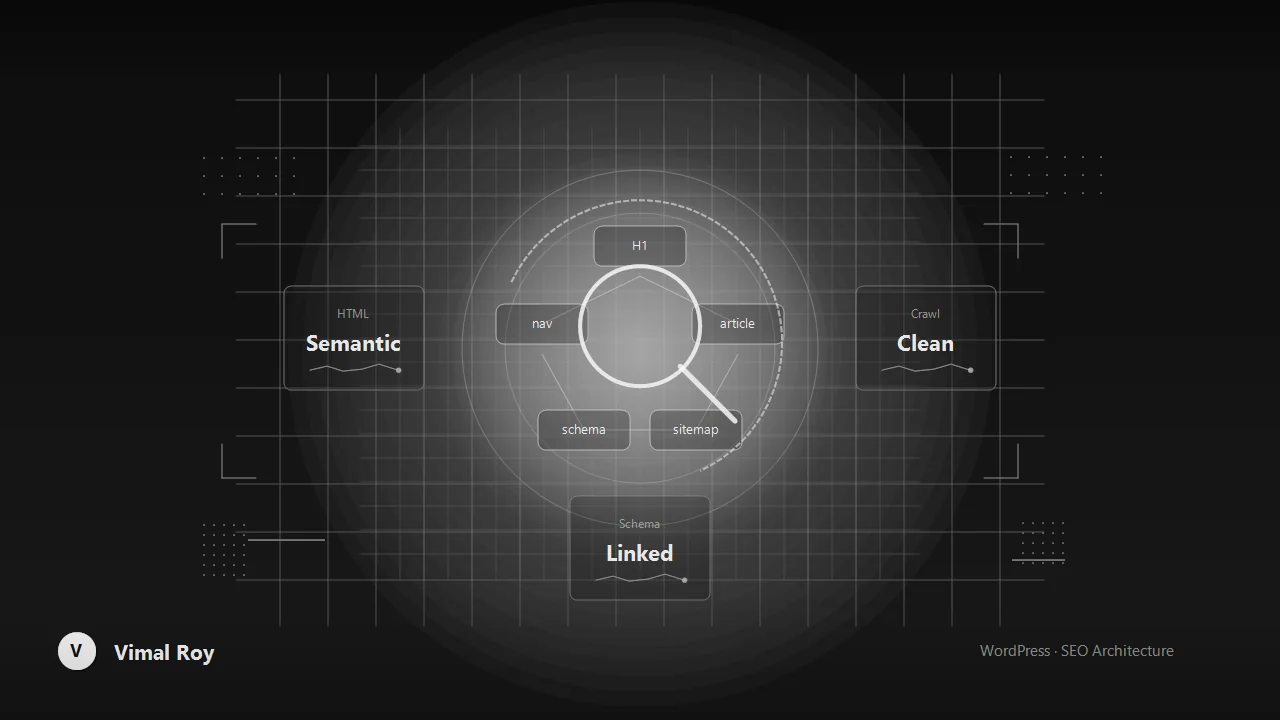
SEO plugins are good at one thing: filling in meta tags and generating a sitemap. They can't fix a theme that buries content in generic <div> soup, duplicates headings across templates, or lets tag and archive pages compete with the articles they're supposed to support. On content-heavy news sites running thousands of posts across multiple taxonomies — AMBCrypto, Coin Edition, and The Coin Headlines among them — the architecture decisions made in the theme move rankings more than any plugin setting.
Semantic HTML isn't optional
Search engines still parse structure, not just text. A theme built on semantic elements gives crawlers a much clearer signal of what matters on the page.
- One
<h1>per page, tied to the actual page title — not the site name repeated on every template. - Logical heading nesting.
<h2>for major sections,<h3>for subsections, never skipping levels just because of how something looks in CSS. - Real elements over generic ones.
<article>for post content,<nav>for menus,<time datetime="...">for publish dates,<header>/<footer>for their actual regions — not<div class="header">everywhere.
None of this changes what a visitor sees. It changes what a crawler understands.
Taxonomy structure decides what competes with what
The single biggest self-inflicted SEO wound on large WordPress sites is taxonomy sprawl: tags created ad hoc by editors, category archives that duplicate the content of a "hub" landing page, and paginated archives with no canonical strategy. Left unchecked, these pages compete against the actual articles for the same keywords.
- Keep tags editorial and sparse — they should aid navigation, not generate a new indexable page for every keyword an author types.
- Give category and tag archives a
rel="canonical"pointing to themselves only when they add unique value;noindex, followthin ones instead of letting them dilute crawl budget. - Build hub/landing pages as actual templates with curated content and internal links, not as a side effect of an archive query.
Crawl budget is a real constraint at scale
Google doesn't crawl every URL on a large site with equal frequency. Wasting crawl budget on faceted filters, low-value paginated pages, or parameter-based URLs means fewer visits to the pages that are actually worth ranking.
// Example: noindex thin paginated archives beyond page 1,
// while still allowing them to pass link equity
add_action( 'wp_head', function () {
    if ( is_paged() && ( is_category() || is_tag() ) ) {
        echo '<meta name="robots" content="noindex, follow">' . "\n";
    }
} );
Pair this with a segmented XML sitemap (posts, categories, and any custom post types split into their own sitemap files) so crawlers can prioritize what's new without re-parsing the entire archive on every pass.
Structured data closes the loop
JSON-LD for Article, BreadcrumbList, and Organization schema doesn't directly move rankings, but it's what turns a plain blue link into a rich result with byline, publish date, and breadcrumb trail — which measurably improves click-through rate on otherwise identical rankings.
The compounding effect
Semantic markup, disciplined taxonomy, crawl budget management, and structured data are each individually minor. Applied together across a theme's templates, the result is a site that search engines can parse quickly, index efficiently, and rank based on the actual content rather than fighting the theme's own architecture. This isn't a one-time audit — it's a set of constraints every new template and content type should be built against from the start.